
🌿 How to Improve Gut Health Naturally: A Practical Guide to Better Digestive Wellness
*** The information shared here is not medical or diagnostic advice. This article contains affiliate links, meaning I earn a commission if you make a purchase through them. ***
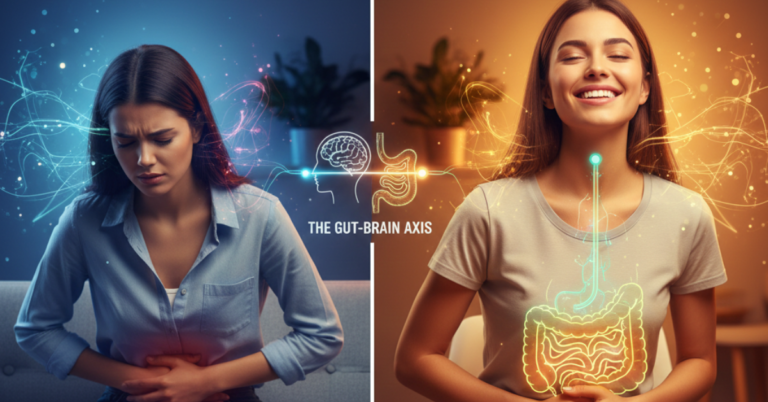
You wake up in the morning, and before your feet hit the floor, you can already feel it. That uncomfortable tightness in your stomach. The bloating that makes you feel three months pregnant by noon. The unpredictable digestive issues that have you planning your entire day around bathroom locations.
Maybe you’ve noticed your energy levels are completely unpredictable. Some days you feel okay, but most days you’re dragging yourself through afternoon meetings, reaching for your third coffee just to stay alert. Your jeans don’t fit quite right anymore, even though you haven’t changed your diet much. And that brain fog? It’s making you forget names, miss appointments, and feel like you’re functioning at half capacity.
If this sounds all too familiar, you are by no means alone. Millions of peoples are experiencing these very same frustrations day in and day out. And here is what many people don’t understand: these often unrelated-seeming symptoms frequently trace back to one common source—your gut health.
But your digestive system isn’t only about the digestion of food. It houses trillions of bacteria, which influence everything from your immune function to your mood, energy levels, and the ability to maintain a healthy weight. When that whole fragile bacterial ecosystem is out of whack, it sends ripples across your entire body.

The Modern Challenge
The challenge is that modern life seems designed to disrupt our gut health:
- Processed foods loaded with additives.
- Stress that never seems to let up.
- Antibiotics, that wipe out bad bacteria along with the good bacteria.
- Environmental toxins we can’t always avoid.
No wonder our digestive systems are struggling. And the frustrating part? You’ve probably tried things already. You want to feel better, but you’re not sure where to begin or what will actually make a difference.
🔬 Understanding What’s Really Happening Inside
Now, let’s talk about what’s really going on in your gut. Your digestive system houses about 100 trillion microorganisms—bacteria, fungi, and other microbes that compose what scientists refer to as your gut microbiome. When all is functioning well, these microorganisms live in harmony, helping you digest food, manufacture essential vitamins, support your immune system, and even create neurotransmitters affecting mood and mental clarity.
But when this balance gets disrupted—a condition called dysbiosis—problems start to emerge. The harmful bacteria begin to outnumber the beneficial ones. Your intestinal lining can become compromised, allowing unwanted substances to pass into your bloodstream. Inflammation increases. Nutrient absorption decreases. And suddenly, you’re dealing with all those uncomfortable symptoms that are affecting your quality of life.
The thing is, your gut health impacts so much more than just digestion. Research keeps finding that an association exists between gut health and conditions throughout the body. That’s why treating your gut health with a natural approach does wonders for you in so many aspects.
💊 Natural Remedies That Encourage Gut Health
So what can you actually do about it? Let’s delve into some practical, natural strategies that support your digestive wellness.
1. Rebuild Your Gut’s Bacterial Balance
A proper balance of bacteria is the foundation of gut health. Your good gut bacteria have two primary requirements: they must be present in adequate numbers, and they need an appropriate environment in which to flourish.
- Probiotics (The Good Guys): Beneficial bacteria can be introduced through fermented foods. Naturally probiotic foods are things like yogurt with live cultures, sauerkraut, kimchi, and kefir.
- Prebiotics (Their Fuel): Your beneficial bacteria also need fuel to survive and multiply. This is where prebiotics come in—special types of fiber that feed your good bacteria. Foods rich in prebiotics include garlic, onions, leeks, asparagus, bananas, and whole grains.
By feeding your beneficial bacteria, you help them flourish and naturally crowd out the harmful organisms. The challenge many people face is getting enough of these beneficial bacteria and the compounds that support them through diet alone, especially when their gut is already compromised. This is where targeted nutritional support can make a significant difference.
Take the next step: If you are looking for comprehensive support to help balance your gut microbiome naturally, consider a science-based nutritional approach designed especially for digestive wellness. Click here to discover a natural solution that blends several gut-supporting ingredients into one convenient daily formula.
2. Support Your Digestive Function
Even the healthiest foods aren’t much help if your body can’t digest them properly. Many with gut challenges have compromised digestion; that is, they are not producing adequate amounts of digestive enzymes to break down proteins, fats, and carbohydrates effectively.
- Mindful Eating: Chewing well, eating in a state of relaxation, and not rushing meals helps digestion. Your stomach needs to be in “rest and digest” mode, not “fight or flight,” to perform optimally.
- Natural Stimulants: Digestive bitters or the dilution of apple cider vinegar in water is another time-honored approach that works for some people to stimulate digestive secretions.
3. Reduce Inflammatory Triggers
While you’re supporting your gut’s good bacteria and digestion, it’s just as important to scale back on things that cause inflammation and gut imbalance.
- Avoid Processed Foods: Additives, preservatives, and artificial ingredients can wreak havoc with your gut lining and feed bad bacteria. Refined sugars, especially, feed the growth of organisms you don’t want flourishing.
- Limit Alcohol: Too much alcohol can throw a wrench into the gut’s bacterial balance and hurt the lining of the intestine. If you do drink, do it in moderation.
- Manage Stress: Chronic stress is a huge factor. Stress hormones can actually change the composition of gut bacteria and increase intestinal permeability. Finding ways to manage your stress—whether through meditation, exercise, or time in nature—is essential for your gut.
4. Nourish Your Gut Lining
The lining of your intestines is one layer of cells thick, but it has the critical job of nutrient entry and critter barrier. It’s very important that it is supported for health.
- Healing Foods: Bone broth traditionally remains a highly valued food for gut health. It is loaded with gelatin and amino acids such as glutamine, which may protect the lining of the intestines. Zinc and omega-3 fatty acids round off the important elements.
- Hydration: Water maintains the intestines’ mucosal lining and helps with gut motility. Make sure to drink enough water throughout the day.
🏃 Lifestyle Factors That Matter
Other than through diet and supplementation, there are various lifestyle factors that greatly affect gut health.
- Prioritize Sleep: Your gut bacteria follow a circadian rhythm much in the same way that you do. Poor sleep disrupts this pattern. Make 7–9 hours of quality sleep a priority.
- Regular Activity: Regular physical activity helps in maintaining healthy gut motility and it increases the diversity of your gut microbiome. Even moderate activities such as a 30-minute brisk walk per day can significantly make a difference.
- Time Meals Wisely: Giving your digestive system a break between meals, particularly overnight, allows it to complete important maintenance processes. A 12–14 hour overnight fast (for example, finishing dinner by 7 PM and not eating again until 7 AM) can support these natural cleaning and repair cycles.
Prepare to support your gut more effectively. Learn about a comprehensive nutritional approach that supports aspects of gut health with multiple dimensions, including bacterial balance, digestive function, and gut lining support. Click here to learn about a natural formula designed to work with your body’s processes for better gut health.
⚙️ Creating a Sustainable Approach
One of the biggest mistakes is trying to be perfect all at once. People overhaul their whole diet in one day, start taking five new supplements, and commit themselves to a super-strict routine that can’t be followed in the long run.
The thing is, the best diet is whatever one you can actually stay with. Progress over perfection any day.
- Begin with one or two changes that feel manageable.
- As you start feeling better—and you likely will—you’ll naturally be motivated to continue. Small improvements add up over time.
- Patience is key. Remember, your gut did not become this way in a single evening, nor will it go back to its optimal function overnight.
What to Realistically Expect
- In a few weeks, you may start to feel more regular and less bloated. Many people find their digestive discomfort starts to ease.
- Over the next several months, these improvements often become more pronounced. Energy levels could improve. The mental clarity may increase.
- Natural approaches work by supporting your body’s own processes. The main thing is consistency and patience.
🚫 Common Mistakes to Avoid
The following are some common pitfalls to be aware of as you strive for a healthy gut naturally.
- Do not try every supplement you may read about online willy-nilly. It’s better to focus on comprehensive, well-formulated options.
- Don’t expect instant results and give up if you don’t see immediate changes. Give any strategy at least a few weeks.
- Don’t ignore the lifestyle factors. You can’t supplement your way out of chronic stress, terrible sleep, and a diet of processed foods.
- Don’t go it alone if you have serious digestive concerns. Persistent or severe symptoms warrant professional evaluation.
🌟 Moving Forward with Confidence
Here’s what you need to know: you don’t have to accept digestive discomfort as your new normal. Your gut can have the potential to shift toward a better balance when given the right kind of support.
Better gut health is not about perfection and impossible strictness but informed choices that support the body’s natural processes. It’s about consistency over time.
You have learned about the things that affect your gut health and the natural strategies that can support digestive wellness. But the question is, are you ready to take action?
Start your journey today: Don’t let another day go by feeling uncomfortable and frustrated with your digestion. Support your gut health naturally with a comprehensive formula designed to address multiple aspects of digestive wellness. Click here now to take the first step toward better digestive wellness and discover how natural support can make a difference in how you feel.
Take that first step today. Your gut—and your overall sense of well-being—will thank you for it.
🔬 Scientific Studies on the Topic
Disclaimer: The information shared here is not medical or diagnostic advice.
1. Gut Microbiome and Health: Mechanistic Insights
- Summary: A comprehensive overview of how the gut microbiota contributes to the regulation of host health. It covers the impact on metabolism, immunity, and various diseases (e.g., obesity, type 2 diabetes), as well as potential therapies.
- Source: https://pubmed.ncbi.nlm.nih.gov/35105664/
2. Influence of Foods and Nutrition on the Gut Microbiome and Implications for Intestinal Health
- Summary: Details how what we eat shapes the structure, composition, and function of the gut microbiome. It emphasizes the critical role of nutrition in maintaining gut homeostasis and preventing digestive diseases.
- Source: https://pmc.ncbi.nlm.nih.gov/articles/PMC9455721/
3. Gut Microbiota in Anxiety and Depression
- Summary: Examines the bidirectional relationship between the gut microbiota and the brain (gut-brain axis), highlighting the gut’s importance in the development and management of mood and neurological disorders.
- Source: https://pmc.ncbi.nlm.nih.gov/articles/PMC10146621/
4. The Gut Microbiota and Inflammation: An Overview
- Summary: Provides an overview of the relationship between the gut microbiota and inflammatory processes, pointing out how the role of bacteria in chronic conditions such as obesity and type 2 diabetes is linked to the balance of the gut flora.
- Source: https://pubmed.ncbi.nlm.nih.gov/33086688/
5. A Comprehensive Review on the Role of the Gut Microbiome in Human Neurological Disorders
- Summary: Discusses in depth the effect of gut flora imbalance (dysbiosis) on various neurological diseases (e.g., Parkinson’s disease, schizophrenia, autism spectrum disorders), and the possibilities of microbe-based therapies.
- Source: https://pubmed.ncbi.nlm.nih.gov/34985325/
These links offer a glimpse into how seriously the scientific community regards the health of the gut and the microbiome as a central factor in human well-being.
Take that first step today. Your gut—and your overall sense of well-being—will thank you for it.
Written by @Balansino. Balansino Blog is based on decades of personal experience in health-related subjects—primarily autoimmune conditions, overweight/obesity, healthy nutrition and HEALTHY LIFESTYLE.