🧘 Reducing Stress and Anxiety in a Natural Way
*** The information shared here is not medical or diagnostic advice. This article contains affiliate links, meaning I earn a commission if you make a purchase through them. ***
You know that sensation where your heart begins racing for no apparent reason? Or when your brain refuses to shut off in the middle of the night, racing ahead to tomorrow’s tasks, while rehashing yesterday’s conversations. Or when your chest begins constricting, as if you’re drowning, despite knowing that everything in your body is perfectly fine? You are not alone. Millions of Peoples are waking up every day with a weight in their hearts that no one can see.
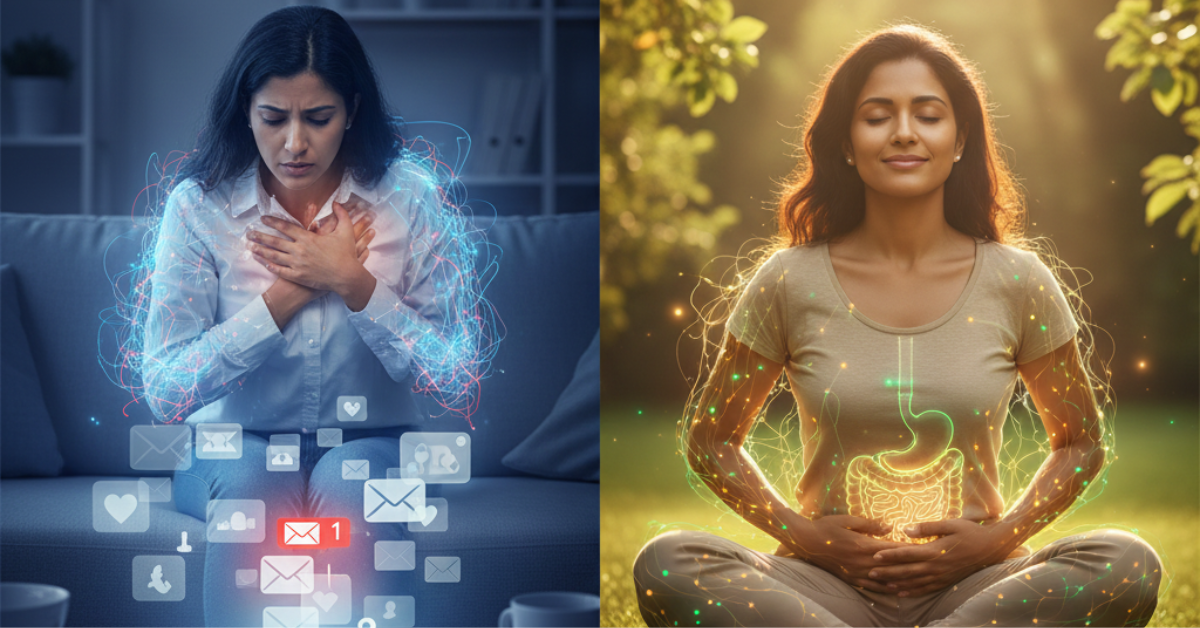
“Modern living has turned into a pressure cooker. With our stressful career, personal finance concerns, family obligations, and a firehose of news and notifications from our devices, our nervous systems are working triple shifts. Your body remains in a constant fight-or-flight response, triggering stress hormones that were designed for burst use, not for ongoing functionality. This creates a condition where you’re exhausted yet jittery, overwhelmed yet unfocused.”
Perhaps you’ve caught yourself lashing out at those you love over little things. Maybe you’ve avoided going out with friends since it all seems too much. Maybe you find yourself staying up late with racing thoughts even though you’re exhausted. Simple choices are insurmountable. Your gut is tied in knots. The fun has been drained from activities you used to enjoy.
Here is what makes it all worse: “Just relax, don’t worry about it so much.” This, from someone with a deep, easy breath, as if you’ve been worried, as if you are anxious, as a choice. “Just relax, don’t worry about it so much.” While you are doing deep breathing exercises. While you’re maintaining those pleasant thoughts.
The reality is, your stress and anxiety are not just happening in your brain, but physically in your body. Your nervous system has gotten out of whack and is overactive. The bright side is that there are ways for your body and brain to return to a calm state using natural, science-proven methods. Not a band-aid solution with no tangible value, but a true method that your body can harness.
🔎 To Understand What’s Happening
Before we look for any solutions, let’s consider what’s happening in your body. So, when you are going through chronic stress, your nervous system gets a messed-up idea of what a danger looks like. Your adrenal glands are working overtime to release stress hormones like cortisol and adrenaline. Your digestive system becomes slow. Your sleep becomes awful. This all affects your body negatively.
But in a positive note, your body has a desire to heal. This body of yours has natural ways to bring back balance. All you have to do is provide it with the right care. Start to consider it like a garden that has been left alone. This garden does not require chemicals; it needs proper care.
💤 The Foundation: Sleep and Your Stress Response
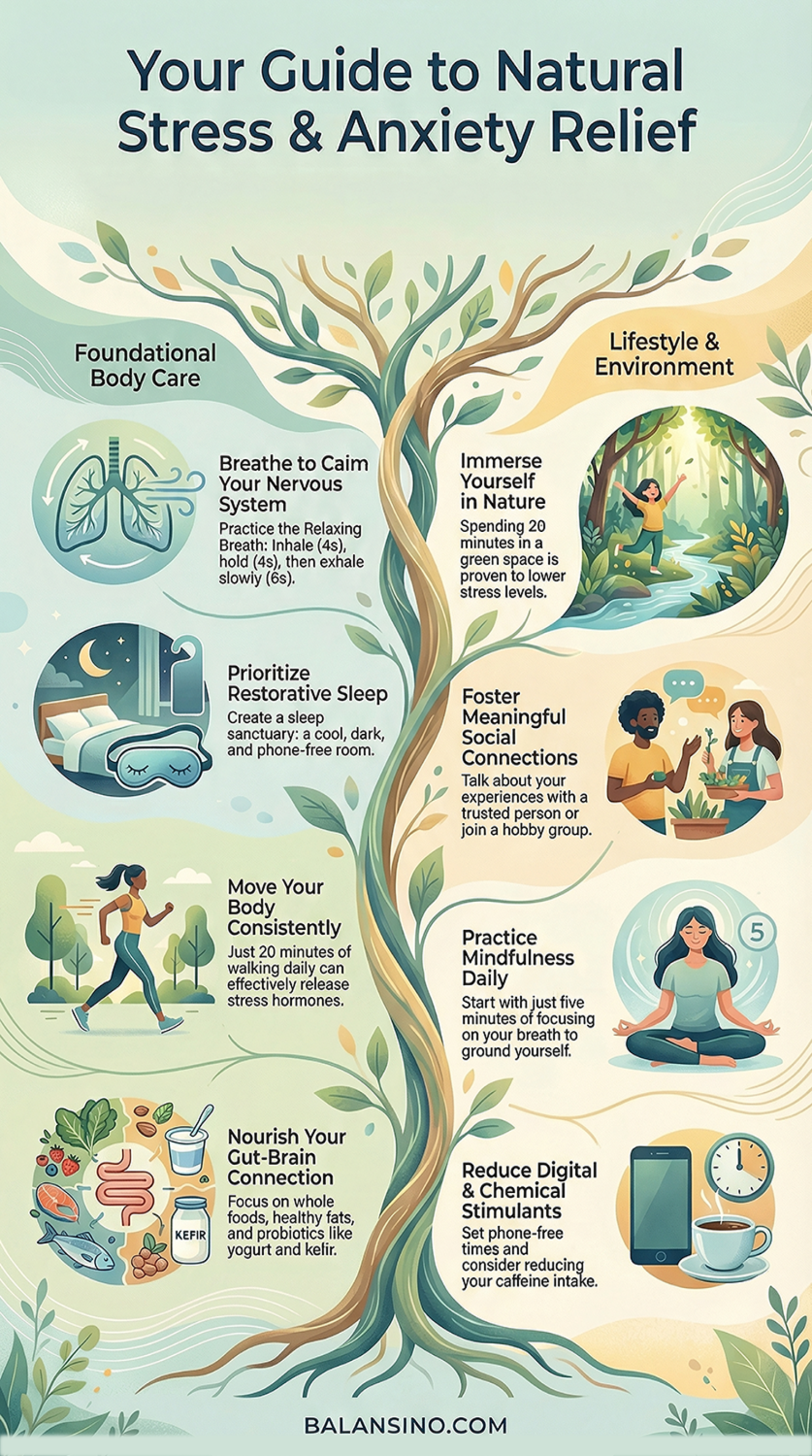
Let’s begin with a factor that impacts all other factors. That factor is sleep. Sleep becomes a problem when you are anxious. On the other hand, sleep deficiency worsens anxiety. This creates a cycle that has never been broken. The brain requires good sleep as it helps in processing your emotions, storing memories, and refreshing your stress response.
- Make a sleep sanctuary. Keep your bedroom environment cooling, dark, and noise-free. Move your phone to another room – I mean it. The light and urge to surf are ruining your sleep.
- Aim for regular sleep and waking hours, even on a weekend. Your body wants a regular beat.
- Create a wind-down ritual. An hour before bedtime, turn down the lights, engage in a relaxing activity such as reading or even a soothing stretch, and remind your body that it’s time to switch modes. Some people like taking warm baths, while others like writing down their worries in a journal.
🏃 Movement: Your Body’s Natural Anxiety Release
Fitness can’t just be measured when it comes to your body. It’s also, without a doubt, one of the most effective ways to conquer anxiety in a natural way. This is because in order for your body to move, you must release stress hormones, which, in turn, gives your body a natural high.
- You don’t have to train like a marathon runner, for example, and spend a lot of time in the gym. Simply taking a 20-minute walk can help you combat anxiety.
- The benefit of yoga is that it encompasses exercise as well as breathing and meditation techniques, providing a triple benefit.
- Dancing around your living room counts. So does gardening.
The trick is to be consistent. To help regulate your nervous system, you want to move your body as often as possible, which would be most of your weeks. This is all about being consistent, not perfect.
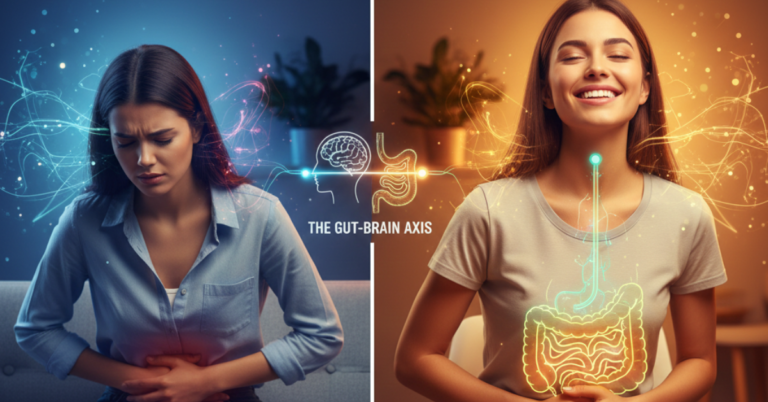
🌱 The Gut-Brain Connection You Can’t Ignore
Here’s a surprising fact that many of you won’t know: your gut has a direct impact on your anxiety. Researchers now refer to your “gut” as your “second brain,” due to your nervous system that is also directly linked to your brain via your vagus nerve.
- Emphasize consuming whole, natural foods.
- Include lots of vegetables, fruits, healthy fats from avocados and wild fish, and high-quality proteins.
- Cut back on sugar and processed foods that can drive inflammation and anxiety.
- Yogurt, kefir, sauerkraut, and kimchi are fermented foods with healthy properties for colon bacteria.
Think about supplementing your regimen with targeted vitamin support. Chances are that certain vitamins, minerals, and calming botanicals are just what your nervous system needs in order to make it through stressful periods. There are natural supplements available that pair magnesium, B vitamins, and traditional calming botanicals which have been used for centuries. Click here to find a natural remedy for stress that works with your body’s stress response system.
🌬️ Breathe: The Remote Control for your Nervous System
“Breathing is the most available tool you have for coping with anxiety in the moment. While your pulse rate and your digestive processes are all automatic, you also have control over your breathing.”
When you’re anxious, your breathing becomes shallow and rapid, which sends a “danger” message to your brain, and this, in turn, enhances your feelings of anxiety. Therefore, by controlling your breathing, you are able to stimulate your parasympathetic nervous system, which has a calming effect on your body.
Simple Breathing Techniques to Try:
- Relaxing Breath:
- Breathe in slowly through your nose for a count of four.
- Hold for a count of four.
- Breathe out through your mouth for a count of six.
- The secret to this technique: it takes longer to breathe out, which turns on that calming response.
- Box Breathing (Navy SEALs technique):
- Breathe in for a count of four.
- Hold for a count of four.
- Breathe out for a count of four.
- Hold for a count of four.
- This breathing technique can be done anywhere, without anyone noticing.
🌲 Nature’s Healing Power
There’s a lot of benefit in taking a break in nature that has been found to relieve stress. Studies show that even 20 minutes in nature can help lower stress. This has been practiced in Japan, known as “forest bathing,” in which people are literally immersed in nature among the trees.
- If you find yourself near a park, a trail, a green space, take yourself there from time to time.
- Leave your device home, either in your car or turn it off.
- Take notice of the observations you can make with your natural senses: bark, bird sounds, a sunbeam through leaves, the scent of dirt.
- Can’t get to nature easily? A small park in your neighborhood will do.
- Learn to care for houseplants.
- Sit back for sunset.
- Listen to nature sounds. Connecting in any form provides solace.
🫂 The Social Connection Component
A human being has a natural tendency to relate with other people. Nothing triggers anxiety like being alone in a secluded place, but when it comes to proper interactions, it becomes extremely calming. This does not imply that you should be around people all the time, especially if you are an introvert.
- Talk about what you are experiencing with a trusted person. Sometimes, just talking about your concerns with a supportive listener can undermine their control over you.
- Find a group that involves a hobby, such as book clubs, hiking groups, painting classes, volunteer groups. Activity brings you together without the stress of having to talk.
- Make a point to cut back on those types of relationships in your life. Not a problem to set boundaries. Your mental well-being is important.
🧘♀️ Mindfulness and Meditation: Mind Training
“Your worried mind loves to travel through time – either worried about what may happen in the future or dwelling on what happened in the past. Mindfulness involves gently bringing your attention back to now, where, for the most part, you’re fine.”
Meditating does not involve stopping your thoughts, let alone reaching a state of blissful nirvana. Rather, it involves being aware of when your mind has wandered and then refocusing your attention.
- Start with just five minutes. Sit in a comfortable position with your eyes shut and concentrate on your breathing.
- When your thoughts drift, as they inevitably will, acknowledge their presence without judgment and refocus your attention on breathing.
- There are also apps like Insight Timer or Calm that you can rely on if you are a newcomer to meditation. But, let’s be honest, you don’t require anything complicated.
- Just yourself, your breath, and a few moments of silence.
Supporting your body’s natural calming processes can make your own mindfulness practice even more potent. If your body has access to proper nourishment in the form of key nutrients and botanicals, it will find it easier to experience that calm. Lots of people find that using natural support in conjunction with their own mindful practices breeds a potent synergy. Look for natural support options that support your body, rather than working against it.
📵 Reducing Stimulants and Digital Overwhelm
How about caffeine? Perhaps that third cup of coffee isn’t helping with your anxiety. Caffeine can be a trigger, as it’s a stimulant that can make your anxiety even worse. Slowly cut back by drinking half-caff, then green tea, then herb tea.
“Just as your body needs rest from all the sensations it can receive, your nervous system needs rest from all the stimulation it can get from technology.”
The constant stream of news, the idea of comparative fun, work emails in the evenings—just to list a few. Again, boundaries are key. Times and spaces that are phone-free, for example. And accounts that make you feel bad about yourself, for instance.
🎨 Creative Activity and Joy
Anxiety can make life feel like a heavy and serious business. Purposively adding creativity and happiness into it brings a balance. There’s no need to be “good” at it to incorporate healing.
- Draw, paint, color.
- Write, not for publication, but to release thoughts and feelings.
- Make music, even if you’re no good.
- Cook a new recipe.
- Build something with your hands.
- Garden. Craft.
- Dance. Sing in your car.
Make a list of small things that make you happy – the smell of coffee, your favorite song, a sunbeam in your face, your pet’s greeting, a good stretch. Now incorporate those experiences into your life. Happiness is a practice, not an occurrence that merely befalls you.
🍎 Role of Nutrition in Mental Well-being
Besides benefits to your gut, certain vitamins are essential in stress management and relieving anxiety.
- Magnesium, also known as “the relaxation mineral,” plays different roles in your body, including stress management. However, most Americans are not getting it. This vitamin can be found in dark leafy vegetables, nuts, seeds, and dark chocolate.
- Fatty fish such as salmon, sardines, and mackerel, rich in omega-3 fatty acids, help maintain a healthy brain and are also effective in treating anxiety.
- B vitamins, particularly B6 and B12, are critical for proper brain functioning.
- Such protein provides the body with amino acids that help form relaxing chemicals.
- Hydration also has a role. Dehydration, even mild, contributes to increased cortisol and mood alterations. A goal of eight cups of water a day, with upward revisions for exercising individuals in warmer environments, would help as an objective.
💊 “When You Need Extra Support”
Other times, even when you make lifestyle changes, you may find that you are in a position where you can benefit from other options. There’s no embarrassment in that. Your body may require a little extra support in terms of nutrition in order to rebalance your body’s stress response.
“Traditional” herbs such as ashwagandha, passion flower, and chamomile have long been known to help with feelings of calm. Recent studies are proving what traditional medicine has long known – that these “natural” remedies are, in all actuality, a true support for your nervous system. Alongside key vitamin and mineral combinations, a true body “boost” can be obtained.
“If you’ve been using these natural approaches and are still needing additional help, consider a comprehensive natural supplement that has been designed for stress and anxiety relief. This can help round out your stress-reduction plan with products that use natural stress-relieving ingredients, in conjunction with key nutrients that your body can actually absorb.” A natural supplement for stress relief and anxiety management can be that missing element that makes all else fall into place. If you are searching for a natural, science-based solution to help with your journey for calmer days and peaceful nights, you may find it here
✨ Developing Your Personal Anxiety Management Strategy
These are not all things you can start doing all at once. In point of fact, attempting to transform your whole life in a single night will merely increase your stress. Begin with small goals. Find a couple of methods that appeal to you, and attempt to stick to those for a period of a few weeks.
- Perhaps you begin with a 10-minute walk in the morning and evening. After that becomes a habit, incorporate your mindfulness exercises.
- Later, consider your nutrition. Incorporate the strategies a step at a time, allowing your body to adapt.
- Monitor your feelings. Notice what works. Your body will provide you with some feedback. Some techniques will ring true in your soul, while others are not a good idea for you. That’s fine. This journey is all about finding what works for YOU.
The Path Forward
Suffering with stress and anxiety day in and day out can be a lonely, draining experience. But there is hope. Your body has a remarkable ability to heal and correct itself when it has the right support. This natural stress relief solution takes a little longer but costs you nothing.
Treat yourself with kindness. This healing thing, it’s a journey, not a straight line. There are some days when it will be tougher than others. That’s just how it goes.
“You are worthy of being calm. You are worthy of a restful sleep. You are worthy of finding happiness without that undertone of anxiety.” This isn’t a privilege; this is your birthright. With every small step you take to care for your nervous system, you are taking your life back from anxiety.
“Remember, you’re not weak for struggling with anxiety. In fact, your nervous system has been working overtime, just as your heart would in a stressful situation, and your nervous system needs help to reboot.”
Every step you take, every deep breath you make, every healthy meal you consume, every moment you rest, as a matter of fact, every move you make, is a healing move.
Start now. Start small. Start where you are. Growing a calmer, more peaceful you, begins on the other side of your decisions.
🔬 Scientific Studies on the Topic
Disclaimer: The information shared here is not medical or diagnostic advice.
1. Bidirectional relationship of stress and affect with physical activity and healthy eating
- Summary: This study examined the bidirectional relationship between daily fluctuations of stress, emotions (affect), physical activity, and healthy eating using ecological momentary assessment (EMA). It found that higher stress and negative affect were related to a subsequent reduction in physical activity, while higher physical activity levels were associated with less subsequent stress and negative affect, and more positive affect. Engaging in physical activity is related to better mood and less stress/negative affect over the next several hours in daily life, suggesting promoting physical activity can “break the cycle” of inactivity, stress, and negative affect.
- Source: https://pubmed.ncbi.nlm.nih.gov/30672069/
2. Brief structured respiration practices enhance mood and reduce physiological arousal
- Summary: This randomized controlled study compared three different 5-minute daily breathwork exercises (cyclic sighing, box breathing, cyclic hyperventilation) with an equivalent period of mindfulness meditation over 1 month. The results showed that breathwork, especially the exhale-focused cyclic sighing, produced greater improvement in mood and reduction in respiratory rate compared with mindfulness meditation. The study suggests that daily 5-minute cyclic sighing has promise as an effective stress management exercise.
- Source: https://pubmed.ncbi.nlm.nih.gov/36630953/
3. Yoga breathing, meditation, and longevity
- Summary: This review discusses the practice of yoga breathing (pranayama), which is considered fundamental for well-being, meditation, and stress reduction. It reviews data on how breathwork can affect longevity mechanisms, both overlapping with and synergistically enhancing the effects of meditation. The article also provides clinical evidence for using yoga breathing in the treatment of depression, anxiety, post-traumatic stress disorder, and for enhancing stress resilience.
- Source: https://pubmed.ncbi.nlm.nih.gov/19735239/
These links offer a glimpse into how seriously the scientific community regards the regulation of breath, movement, and stress as central factors in mental and physiological well-being.
“If you’ve been using these natural approaches and are still needing additional help, consider a comprehensive natural supplement that has been designed for stress and anxiety relief. This can help round out your stress-reduction plan with products that use natural stress-relieving ingredients, in conjunction with key nutrients that your body can actually absorb.” A natural supplement for stress relief and anxiety management can be that missing element that makes all else fall into place. If you are searching for a natural, science-based solution to help with your journey for calmer days and peaceful nights, you may find it here
Written by @Balansino. Balansino Blog is based on decades of personal experience in health-related subjects—primarily autoimmune conditions, overweight/obesity, healthy nutrition and HEALTHY LIFESTYLE.